Claude memory vs ChatGPT memory: how to share one memory across both
In short
How Claude's and ChatGPT's memories work, why each keeps its own slice, and how Fezola Memory gives both one shared, encrypted memory you control.
By FezolaPublished 2 min read

On this page
Claude and ChatGPT each have their own memory, and neither shares it with the other. What you tell Claude stays in Claude, and what you tell ChatGPT stays in ChatGPT, so you re-explain yourself every time you switch. The way to share one memory across both is to keep it outside the assistants, in a place both can read and write. This article compares the two built-in memories, then shows how a shared memory works. Facts about Claude and ChatGPT come from Anthropic's and OpenAI's help centers, read on 13 November 2026: they change fast, so check the links.
How ChatGPT memory works
OpenAI's help center describes two mechanisms. Saved memories are details you ask ChatGPT to keep, and they are considered in future answers until you delete them. Reference chat history lets ChatGPT draw on past conversations, and what it derives can change over time. The two stores are separate: deleting the original chat does not delete a saved memory. Temporary Chat neither uses existing memories nor creates new ones.
How Claude memory works
Anthropic's help center describes a memory that can include a summary of what Claude has learned, and a pause switch: while memory is paused, Claude neither uses nor creates memories. Anthropic also offers an import where you paste text exported from another assistant, and describes it as experimental. Memory lives inside Claude: it does not travel to other tools.
The problem: two slices of you
Each assistant remembers only its own slice. If you use Claude for writing and ChatGPT for research, neither knows what the other learned. Importing text by hand is a one-off copy, not a sync, and it goes stale the next day.
One shared memory outside both
Fezola Memory is a memory stored on your Fezola account, not inside an assistant. Your assistants reach it through the same Fezola connector at https://api.fezola.com/mcp that already holds your mail, calendar and other tools, with five tools: remember, recall, update memory, forget and list memories.
- Shared. Whatever one assistant saves, another connected assistant can recall, sorted by project. We have verified this with Claude. ChatGPT receives the same tools through a custom connector, available on Business, Enterprise and Edu plans.
- Automatic. Memory is on by default. Assistants save lasting facts such as preferences, people, projects and decisions, and recall them in later conversations.
- Yours to control. In the Fezola app you can view, search, edit, delete one memory or erase all, export it, or turn it off. Secrets such as passwords are refused.
- Encrypted at rest. It is kept until you delete it and erased with your account. It is not end-to-end encrypted, because the server holds the key.
Read more in one shared memory for Claude, ChatGPT and all your AI assistants.
Which should you use?
Keep each assistant's built-in memory for what it does well inside that product. Add a shared memory for what should follow you across tools: who you are, your clients and projects, your preferences. To connect Fezola to Claude, see how to add a custom connector to Claude, and for the tools it can use once connected, see best MCP servers for Claude and ChatGPT. New to MCP? Start with what is MCP.
Questions and answers
Does Claude share its memory with ChatGPT?
No. Each assistant keeps its own memory inside its own product. Claude's memory stays in Claude and ChatGPT's stays in ChatGPT. You can import text from one into the other by hand, but there is no live sync.
How does ChatGPT memory work?
According to OpenAI's help center, ChatGPT has saved memories, details you ask it to keep, and it can also reference your chat history. The two are separate: deleting a chat does not delete a saved memory, and Temporary Chat neither uses nor creates memories.
How does Claude memory work?
According to Anthropic's help center, Claude can keep a memory summary, you can pause memory, and you can import memory from another assistant by pasting exported text. Anthropic describes imports as experimental.
How can I share one memory between Claude and ChatGPT?
Use a memory that lives outside both assistants. Fezola Memory is stored on your Fezola account and served to assistants connected to Fezola through five memory tools, so what one assistant saves can be recalled by another. We have verified it with Claude; ChatGPT receives the same tools on plans that allow custom connectors.
Is Fezola Memory private?
It belongs to your account and is encrypted at rest, not end-to-end encrypted. You can view, search, edit, delete, export or turn it off in the app, and secrets such as passwords are refused.
Is it free?
Fezola is free with 2 sources, and Memory is not a source. Pro connects unlimited sources, with a 7-day free trial.
More in Memory and privacy
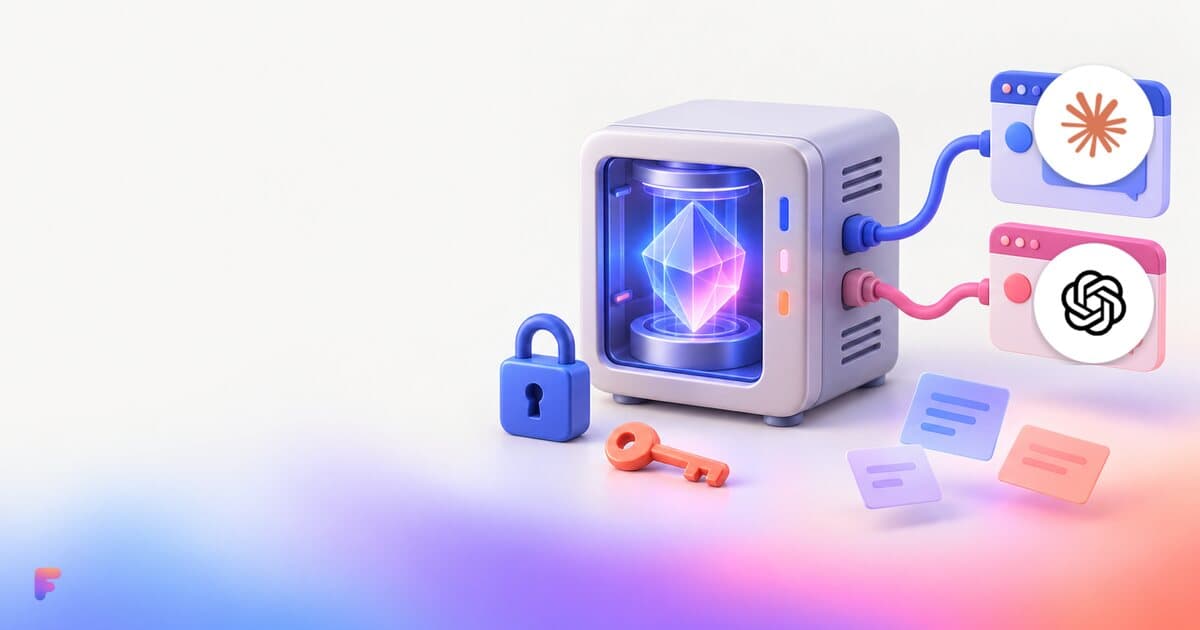
Memory MCP server for Claude and ChatGPT: how it works and what to check
How a memory MCP server gives Claude and ChatGPT one shared memory: five tools, filing by project, and five things to check before you trust one.
2 min read

One shared memory for Claude, ChatGPT and all your AI assistants
Fezola Memory lets every assistant recall what you told another one. How it works, how it is filed by project, and how to view, edit or erase it.
3 min read
Is it safe to connect an MCP server to Claude or ChatGPT? A checklist
Connect only trusted MCP servers, check permissions, limit tools, keep approvals on and know how to revoke. A checklist from official sources, Nov 2026.
3 min read